
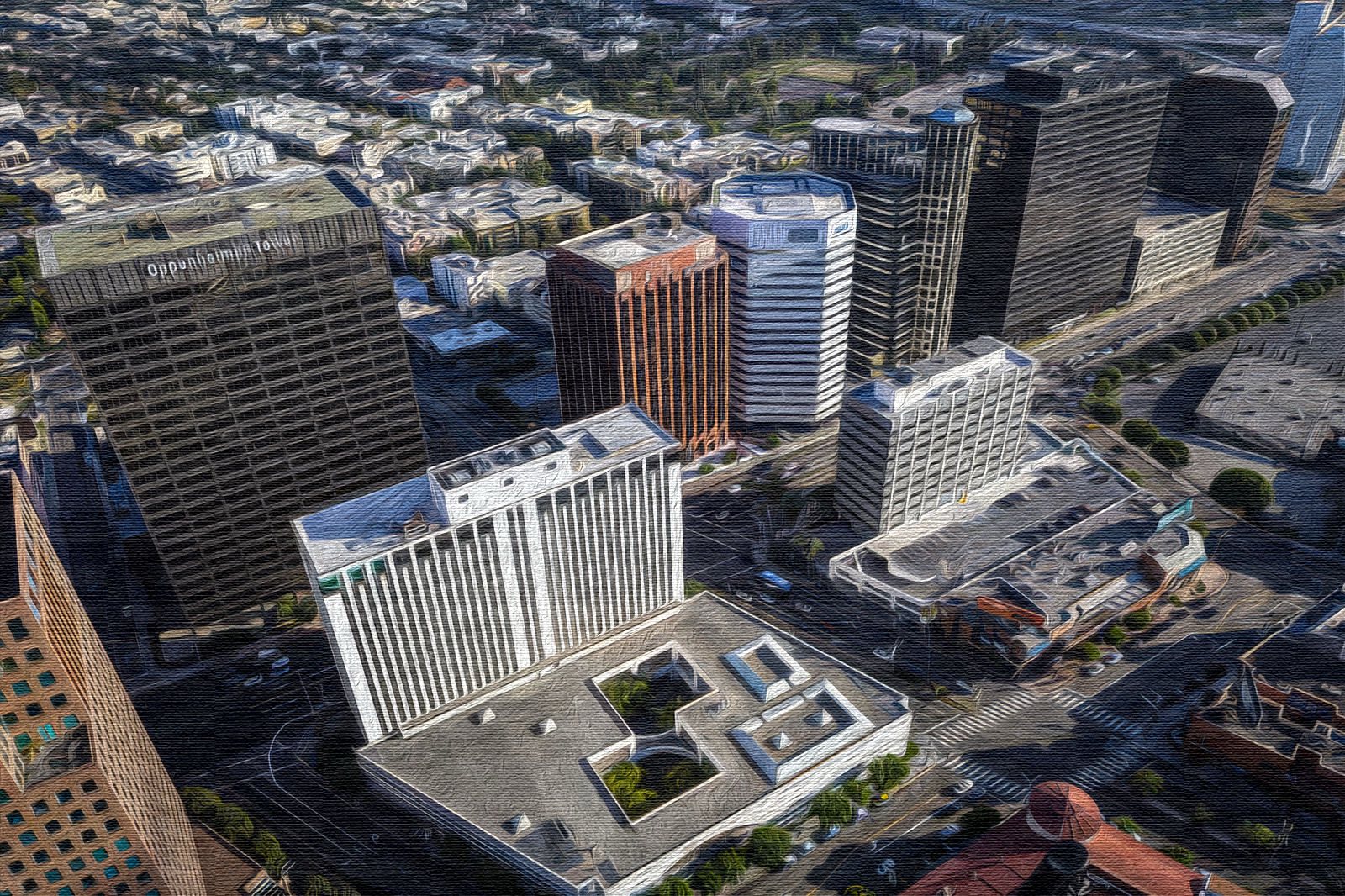
A short, lively history of the oil company that once called Wilshire Boulevard home.
Before Occidental Petroleum became a Houston heavyweight with massive shale assets and carbon-capture ambitions, it lived a very different life — as a Los Angeles–based oil underdog with a taste for bold deals and a flair not typical of the energy business.
Born in California, Raised on Wilshire
Founded in 1920 in California, Occidental Petroleum spent decades as a quiet operator until it began expanding aggressively and set up its headquarters on Wilshire Boulevard in Los Angeles. From that location, the company built an identity that blended energy business discipline with just a touch of Hollywood confidence.
In an industry dominated by east-coast and Texas giants, Oxy stood out simply by being an LA original.
The Deals That Put Oxy on the Map
Occidental’s rise from obscurity to influence came through a series of major moves — some legendary, some controversial:
1960s — The Libya Breakthrough
Occidental won a massive oil concession from King Idris of Libya, beating out far larger competitors. This field turned into one of the most profitable oil finds of the era, putting Oxy on the global energy map almost overnight.
1970s — U.S. Expansion
Oxy acquired Hooker Chemical, which expanded its U.S. industrial footprint.
Not all of this era’s acquisitions aged well, but they reflected the company’s go-big strategy.
1980s — Coal & Chemicals Push
The company purchased coal assets and chemical companies, trying to become a diversified energy conglomerate. Some moves prospered; others added long-term liabilities. Still, the deals demonstrated just how far from a “small California producer” Oxy had traveled.
These deals — both hits and misses — established Oxy as a fearless operator willing to challenge energy giants and negotiate where others wouldn’t.
Life as LA’s Largest Corporation
For decades, Occidental was the biggest company headquartered in Los Angeles, a rare distinction in a city better known for entertainment than energy.
The Wilshire Boulevard headquarters became a symbol of Oxy’s ambition: global deals, art collections, diplomats visiting, and a corporate strategy broadcast from the heart of LA rather than Houston or New York.
Armand Hammer was part of the story, yes — a charismatic, globe-trotting chairman from 1957 to 1990 — but the company’s evolution was larger than any one personality.
Reinvention: Leaving LA, Finding Shale
As the U.S. energy landscape shifted toward Texas and the shale revolution, Occidental eventually moved its headquarters to Houston. But the company’s bold strategic streak continued.
2019 — The Anadarko Deal
Oxy acquired Anadarko Petroleum for $55 billion, beating out Chevron in a high-profile bidding war. This instantly made Oxy one of the biggest operators in the Permian Basin, the most productive oil field in North America.
Occidental Today
Today Occidental Petroleum is a tightly focused energy and carbon-management company built around three major businesses: oil & gas production, chemical manufacturing, and carbon capture technologies. Its upstream operations center on the Permian Basin, where Oxy is one of the largest producers of oil and natural gas, along with meaningful assets in the Gulf of Mexico, Colorado’s DJ Basin, and international fields in Oman and Algeria. In the shale arena, Oxy competes directly with companies like Chevron, EOG Resources, and Pioneer.
Beyond drilling, Oxy owns OxyChem, a major U.S. producer of PVC, caustic soda, chlorine, and other industrial chemicals used in construction materials, plastics, and consumer goods. This division gives Oxy a stable, countercyclical revenue stream and pits it against chemical producers like Westlake and Olin.
Where Oxy stands out today is in carbon capture and sequestration. Through its subsidiary 1PointFive, the company is building some of the world’s largest Direct Air Capture (DAC) plants, including the high-profile Stratos project in Texas. Oxy partners with firms such as Airbus, All Nippon Airways, and major industrial emitters to supply carbon-removal credits or permanent CO₂ storage. Its carbon management strategy competes with emerging players like Climeworks, as well as traditional energy companies developing their own sequestration hubs.
Taken together, these divisions make Oxy a hybrid: part shale producer, part chemical manufacturer, and part pioneer in large-scale carbon solutions. It’s far removed from its old LA conglomerate days—and now operates at the intersection of conventional energy and the emerging low-carbon economy.
A Los Angeles Legacy
Even though Occidental no longer resides on Wilshire, its California chapter shaped its DNA. A company founded on the West Coast took risks, struck improbable deals, and challenged global competitors — all while projecting a distinctly LA confidence.
Today’s Oxy may be headquartered in Houston, but its boldness still feels like something that started under the palm trees.
HLRLA Staff Writer